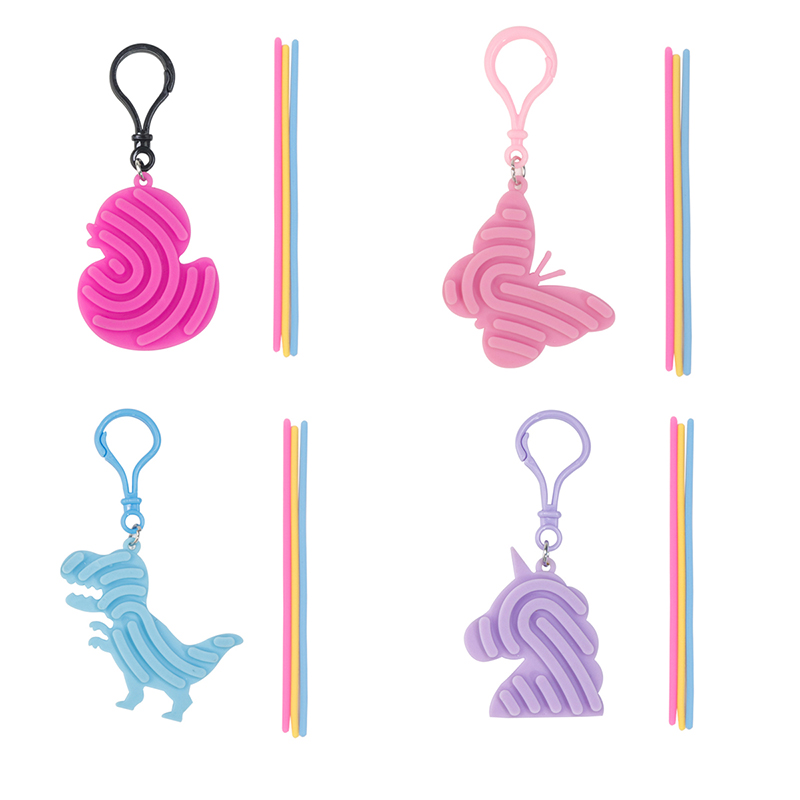
A logo stamped onto a rigid plastic tag cracks eventually. Drop it, step on it, leave it in a hot car, and sooner or later it snaps. Silicone doesn't behave that way. That flexibility is a big part of why a silicone keychain shows up everywhere from conference giveaways to backpack zippers — the material bends under stress instead of breaking, and it keeps doing that for years.
From Mold To Finished Shape
Producing a silicone keychain starts with a mold, usually cut from steel or aluminum, carved with whatever design a client specifies — a logo outline, a mascot shape, lettering, sometimes intricate multi-color patterns. Liquid silicone gets injected or pressed into that mold cavity, cures under heat, and comes out holding the exact shape carved into the tool.
Two-dimensional flat designs are the simplest to produce, since they need only a single mold pass. Three-dimensional keychains, shaped like a mini object or figure, require more complex mold work and sometimes multiple pieces bonded together after molding. Color application varies too: some designs get color mixed directly into the silicone before injection, while others use surface printing or paint-filled recessed grooves for sharper detail on multi-color logos.
Where Businesses Put Them To Work
Promotional giveaways account for a large share of silicone keychain orders — trade shows, product launches, and retail packaging inserts all lean on these items because they're cheap to produce in bulk and land in someone's daily rotation of keys or bag straps. Sports teams and event organizers order them too, often shaped around a mascot or event date, handed out as souvenirs that fans actually keep using afterward.
A handful of use cases keep recurring across order requests:
- Corporate branding items, distributed at conferences or included in new-hire welcome kits
- School and sports fundraising products, sold in bulk to supporters
- Retail add-ons, bundled with a primary product as a small bonus item
Texture, Color, And Grip Considerations
Silicone surfaces come in a range of finishes — glossy, matte, or textured — and each changes how a keychain feels in hand as much as how it looks. Matte finishes tend to hide fingerprints and light scuffing better than glossy surfaces, which matters for items that get handled constantly on a keyring. Textured or debossed designs, where the logo sits slightly recessed into the surface, hold color better over time since the ink or pigment sits protected below the surrounding surface level rather than sitting exposed on a raised edge.
Color consistency across a production batch depends heavily on how pigment gets mixed into the base silicone. Buyers ordering brand-specific colors usually provide a Pantone reference, letting the factory match pigment ratios precisely rather than relying on visual approximation alone.
Attachment Styles And Hardware
The keychain itself needs metal hardware connecting the silicone body to an actual key ring, and this small detail affects durability more than people expect. Split rings are common and inexpensive, though they can be fiddly to open. Lobster clasps and swivel clips offer easier attachment and detachment, popular for bag charms that get swapped between items regularly. Some designs skip a separate ring entirely, molding a loop directly into the silicone body itself, which removes one potential failure point since there's no metal-to-silicone joint that could eventually work loose.
Order volume for silicone keychains tends to scale easily once a mold exists, since the tooling cost gets spread across however many units a client orders afterward. That's part of why bulk promotional orders favor this product — a single mold investment can support repeat runs across multiple events or seasons without needing new tooling each time.

 EN
EN English
 日本語
日本語 Español